Systems Knowledge
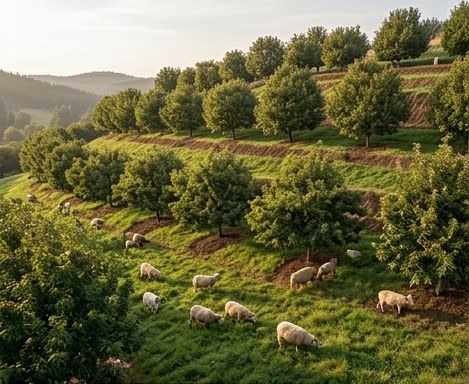
Tree Crops & Two-Story Agriculture
Nut and fruit trees on the hillside, grazing pasture underneath — J. Russell Smith's century-old case for tree crops as the alternative to the row-crop erosion that built the Dust Bowl.
In 1929, a geographer named J. Russell Smith watched annual row crops — corn, cotton, tobacco — erode America's hill country down to bedrock, and asked an obvious question nobody had bothered to ask: why is farming a hillside the same way you'd farm a flat field?
His answer was Tree Crops: A Permanent Agriculture, and it's still one of the sharper cases ever made for planting a hillside in trees. Chestnuts, walnuts, honey locust, mulberry, persimmon, oak — roots that hold a slope together for centuries while their nuts and fruit feed people and livestock every single year, no replanting required. Bill Mollison cited it as a direct influence on permaculture; the core idea has aged better than most agricultural theory from the era.
Two-story agriculture is the load-bearing concept: nut trees on the upper story, grazing pasture on the lower one, both perennial, both productive, on the same acre at the same time.
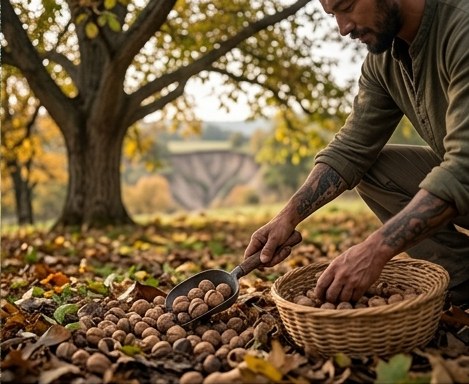
Honey locust pods make sweet, high-protein fodder that livestock harvest themselves off the ground — Smith's proof that a "waste" hillside tree could out-produce a feed budget. Acorns, once leached of tannin, were a staple food across multiple continents for longer than grain agriculture has existed. None of this is speculative; it's mostly just forgotten.
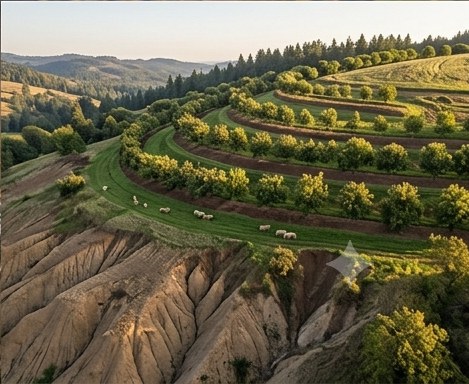
The math is simple: a permanent, tree-rooted hillside is a better long-term bet than an annual one that has to be replanted, replowed, and re-eroded every single year.
Full write-up coming — species selection, planting density, and how this integrates with the Earthworks Division's own contour and swale work.